
In our personal lives, we fear abandonment. Parents stay with children, lovers and spouses remain true to one another. To be abandoned is to be forsaken, cast to the four winds.
But when you’re talking about bankruptcy, there’s a freedom in abandonment. As with a jilted lover, abandoned property is freed from the chains that bind it. Once abandoned, property can be sold, transferred, used (and abused) to your heart’s content.
Under Section 541 of the U.S. Bankruptcy Code, just about everything you own becomes the property of the bankruptcy estate the minute you file for bankruptcy. The estate is a figment of your imagination inasmuch as it’s not a flesh-and-blood person, but it’s very real to the extent that your property now belongs to that figment.
Some property can be exempted – in other words, you can remain in control of it subject to certain limitations. Other property is exempted, which means it never comes into the estate in the first place.
For the rest of your stuff, it doesn’t belong to you once your case is filed.
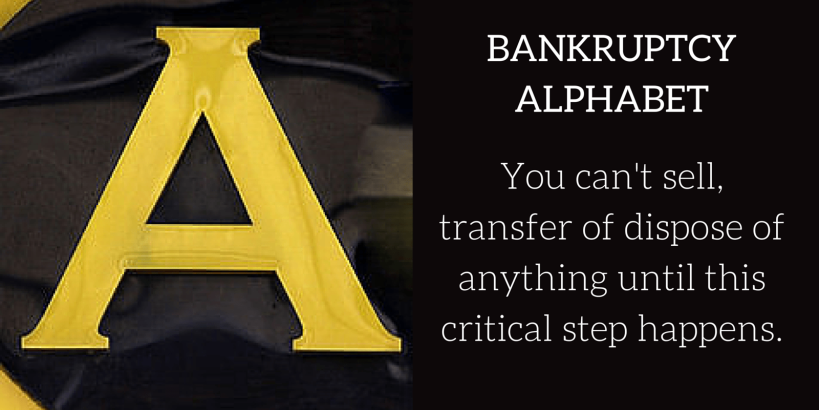
In order for you to regain control, the trustee needs to abandon the property. Without abandonment, you can’t do anything with it.
Under Section 554 of the U.S. Bankruptcy Code, property is abandoned in one of two ways:
- after a motion is made to the court by either the trustee or a party in interest to the case demanding abandonment of property that is considered burdensome or of inconsequential value and benefit to the estate; or
- unless the court orders otherwise, the closing of the case serves to abandon property that hasn’t been administered by the trustee.
It’s fitting that we begin the Bankruptcy Alphabet with a term that carries such negative connotations in real life yet positive ones within the context of debt relief. I think it serves to underscore just how strange the world of bankruptcy truly is, and the fact that often we need to check logic at the door when dealing in matters of bankruptcy.